
AI Smile Simulation with Centralised Booking and CRM for a Multi-Location Orthodontics Group
Let's Connect
Overview
What we built
An orthodontics group with 22 locations was losing interested patients before they ever booked a consultation. We built a smile simulation tool that turns curiosity into confirmed appointments.
In plain terms: people visiting the group's website wanted to know what treatment could do for their smile before committing to a consultation, and the site gave them no way to find out. Each practice booked appointments by phone in its own way, and marketing leads sat in spreadsheets nobody followed up. So interest arrived every day, and much of it quietly leaked away before a patient ever sat in a chair.
We built a browser tool where a visitor uploads a selfie and sees a projected post-treatment smile in seconds, then books online at any of the 22 locations in the same flow. Every enquiry now lands in one shared CRM that follows up automatically by SMS and email. 34% of visitors who completed a simulation went on to book, online self-scheduling grew to 58% of new-patient bookings within 6 months, and no-shows fell from 21% to 12%.
The Problem
Leads lost before consultation
The group's marketing was doing its job: prospective patients across the US Southeast were finding the website and browsing treatment options. The drop-off came at the next step. Without any sense of what aligners or braces could achieve for their own smile, visitors hesitated to commit to a consultation, and there was no low-pressure way to explore before picking up the phone.
Booking itself was fragmented. Each of the 22 practices managed its own phone-based scheduling, which meant opening hours, hold times and booking habits differed from location to location. A visitor ready to book still had to call the right practice at the right time, and front desks spent large parts of the day handling calls that an online system could have absorbed.
Behind the scenes, marketing leads landed in disconnected spreadsheets with no follow-up sequence attached. Nobody could say reliably which enquiries had been contacted, which had gone cold, or why new-patient conversion varied so widely from one location to the next. The group was paying to generate interest it had no shared machinery to convert.
Hesitant website visitors
Prospective patients could not see what treatment might achieve for them, so they browsed, hesitated and left without ever booking a consultation.
Phone-only scheduling
Every practice ran its own phone-based booking, so availability, hold times and the booking experience differed across all 22 locations.
Leads in spreadsheets
Marketing enquiries sat in disconnected spreadsheets with no automated follow-up, so promising leads went cold quietly and nobody owned the job of reviving them.
Uneven conversion
New-patient conversion varied widely between locations, and with no shared data the group could not tell which practices needed help or why.
What it was costing them
Every visitor who hesitated and left was a consultation that never happened, and every uncontacted spreadsheet lead was marketing spend written off. Front desks burned hours on scheduling calls, no-shows ate into clinical time, and the wide swing in conversion between locations meant the group's growth depended on which practice a patient happened to find first.
The Solution
Simulation-to-booking platform
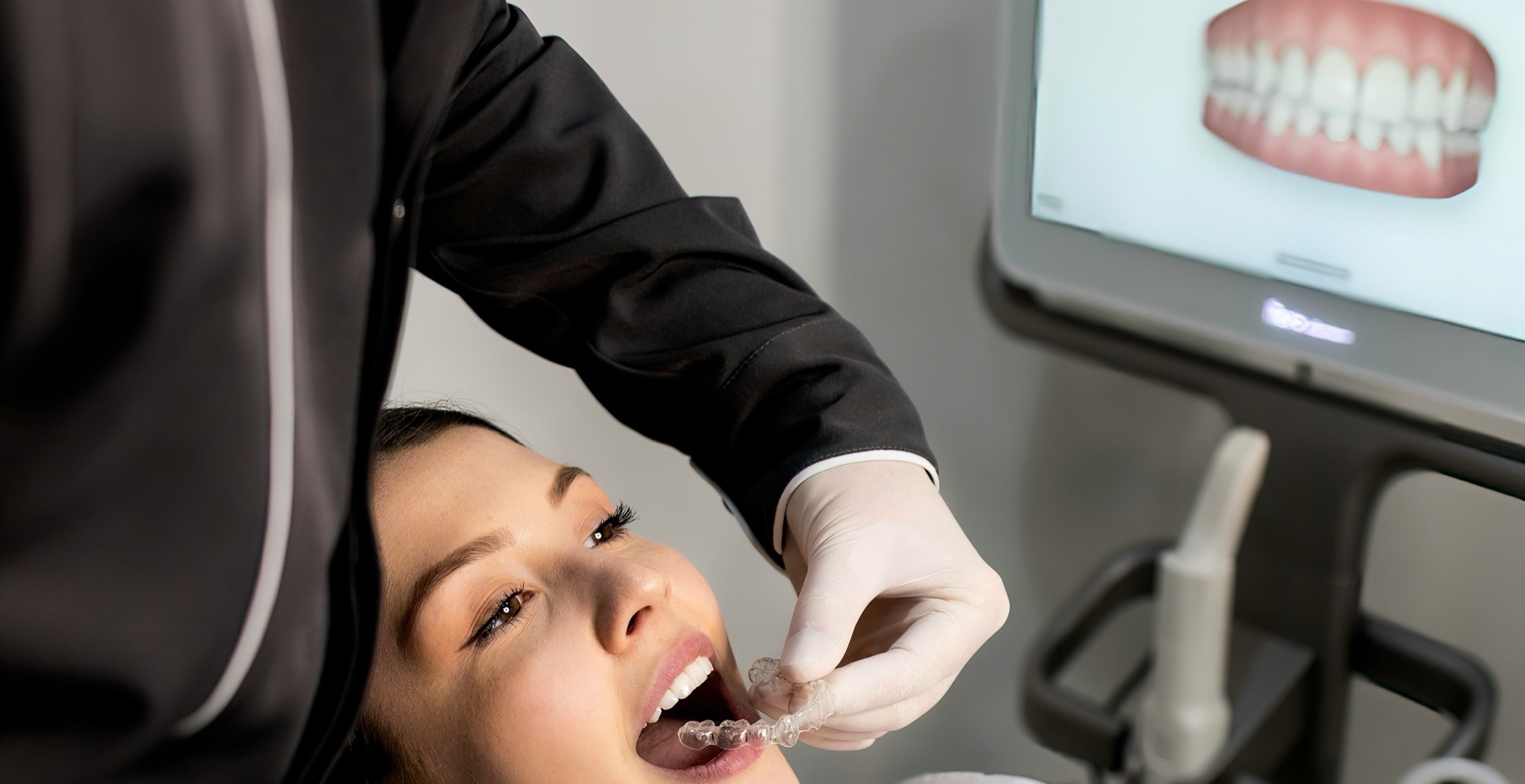
We started with the moment of hesitation. The smile simulation tool runs in the browser: a visitor uploads a selfie, a computer vision model maps their facial and dental features, and a projected post-treatment smile renders in seconds. No app to install, no appointment needed, just an immediate, personal answer to the question every prospective patient was already asking.
The preview flows straight into a centralised online booking system covering all 22 locations, so the emotional peak of seeing a possible new smile connects directly to picking a time and a practice. Real-time availability replaces the phone tag, and patients book at any hour rather than only during front-desk hours.
Every simulation and booking lands in a shared CRM as a tracked lead. Automated SMS and email sequences handle follow-up: nudging visitors who simulated but did not book, confirming appointments, and sending reminders ahead of first consultations. Front desks now work from one system instead of local spreadsheets, and the group sees its whole funnel in one place.
Key decisions
Simulation before scheduling
We put the smile preview at the front of the funnel, so visitors get a personal reason to book before being asked to commit.
Run it in the browser
The tool works from a selfie upload in any browser, removing the app-install step that would have cost the group most of its hesitant visitors.
One booking system for all
Rather than improving each practice's phone process, we centralised scheduling across all 22 locations behind a single online flow with shared availability.
Automate every follow-up
SMS and email sequences fire without staff involvement, so no lead depends on a busy front desk remembering to call back.
One CRM as source of truth
Every lead, simulation and booking is recorded in the shared CRM, replacing disconnected spreadsheets and making conversion comparable across locations.
Measurable Impact
What changed after launch
The funnel stopped leaking. 34% of visitors who completed a smile simulation went on to book a consultation, and within 6 months online self-scheduled appointments had grown to 58% of all new-patient bookings. The automated reminder sequences cut the first-consultation no-show rate from 21% to 12%, protecting clinical time the group had previously written off.
The operational load shifted too. Front-desk scheduling call volume fell by roughly 40% across all locations, freeing staff for in-practice patient care. And because every lead now moves through one CRM, the group can finally see where conversion differs between locations and act on it, instead of guessing from spreadsheets.
Lead capture
Enquiries scattered across disconnected spreadsheets
Every lead tracked in one shared CRM
Appointment booking
Phone-based scheduling run separately by each practice
Centralised online booking across all 22 locations
Lead follow-up
Manual, inconsistent, dependent on busy front desks
Automated SMS and email sequences on every lead
No-show rate
21% of first consultations missed
Down to 12% with automated reminders
Headline results
34% of visitors who completed a smile simulation went on to book a consultation
Online self-scheduled appointments grew to 58% of all new-patient bookings within 6 months
First-consultation no-show rate dropped from 21% to 12% after automated CRM reminders
Front-desk scheduling call volume reduced by roughly 40% across all locations
Tech & Tools Used
What powered the build
Every tool below earned its place in this engagement. Here is the part each one played.

Next.js
Delivers the browser-based simulation experience and the online booking flow, keeping the journey from selfie upload to confirmed appointment inside a single fast web application.

Node.js
Runs the booking and lead services that connect the simulation front end, the scheduling system and the CRM, handling availability lookups and appointment confirmations.

Python (FastAPI)
Serves the simulation API: it receives the uploaded selfie, runs the vision pipeline and returns the rendered post-treatment preview to the browser within seconds.

PyTorch
The framework behind the computer vision model that generates each projected post-treatment smile from the visitor's uploaded photo.

MediaPipe Face Landmarking
Locates the facial and dental landmarks in each selfie so the simulated smile is aligned accurately to the visitor's own features before rendering.

PostgreSQL
Stores appointment availability, bookings and lead records for the whole group, giving every practice and the central team one consistent view of the schedule.
AWS S3 + CloudFront
Holds uploaded selfies and rendered smile previews, and delivers the simulation experience quickly to visitors wherever they browse from.

Twilio SMS
Sends the automated SMS follow-up and reminder messages, nudging visitors who simulated but did not book and reminding patients ahead of their first consultation.

HubSpot CRM API
Syncs every simulation, enquiry and booking into the shared CRM and triggers the follow-up sequences, replacing the disconnected spreadsheets each practice kept before.
Ready to Build your Dental & Orthodontics Business with AR & Visual Simulation
Ask Byte
Ask Byte
Typically replies instantly
just Now
Hi! I'm OrganByte's assistant. How can I help you today?
AI-generated content may be incorrect