
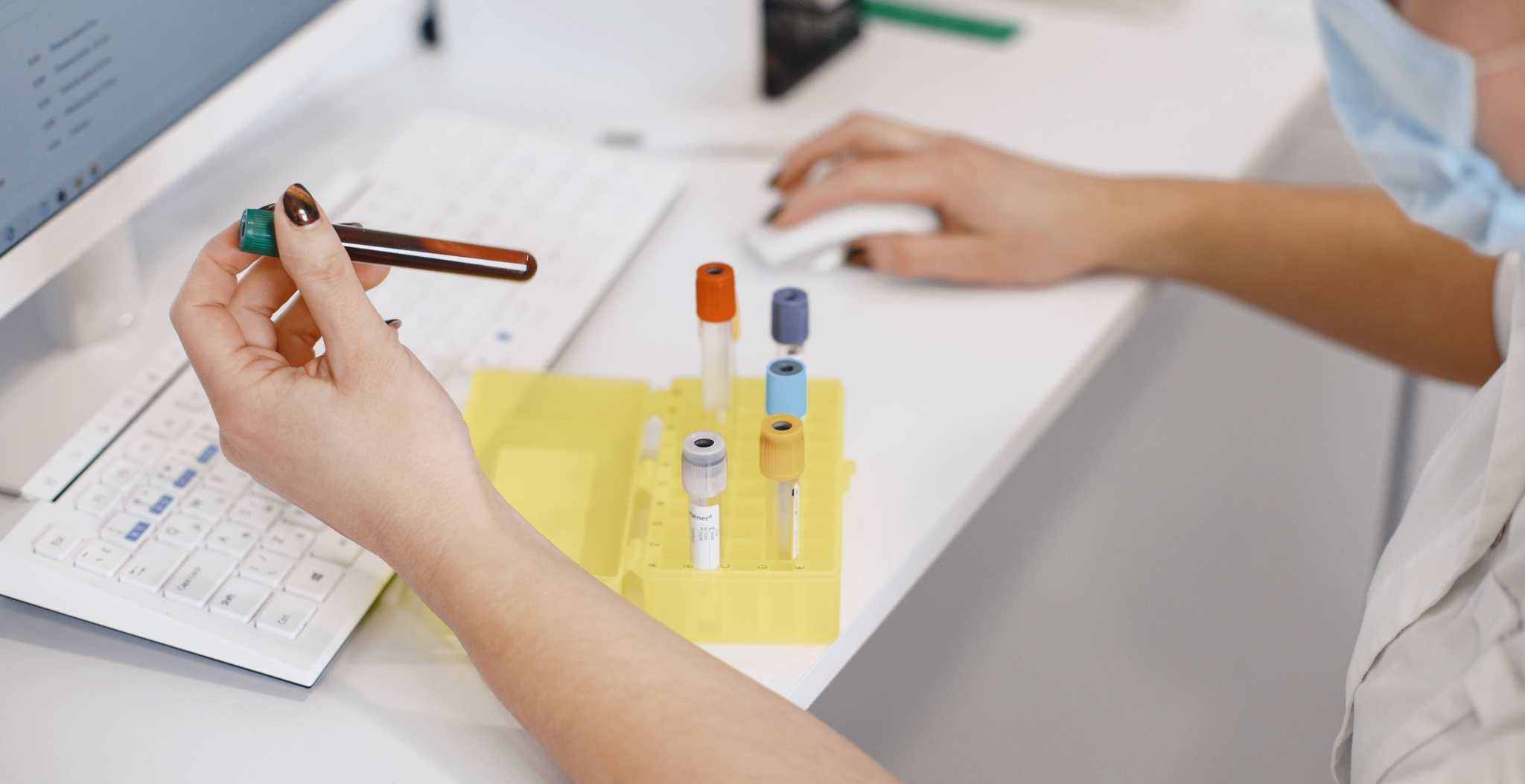
Integrating Liquid-Biopsy AI Results into EHR Workflows for an Oncology Diagnostics Lab
Let's Connect
Overview
What we built
An oncology diagnostics lab was faxing AI-assisted liquid-biopsy results to 60 partner clinics as PDFs, entirely outside the EHR. We built the integration that puts structured results directly into the patient chart.
In plain terms: this oncology diagnostics lab serves 60 partner clinics, and every liquid-biopsy panel result left the lab as a PDF report sent by fax or portal download, never touching the EHR itself. Clinic staff re-keyed those findings into patient charts by hand, results took days to reach the treating physician, and test ordering still ran on paper requisitions with no visibility into where a given sample actually was.
We built an HL7 FHIR integration layer connecting the lab's existing AI-assisted analysis pipeline to partner clinic EHRs, so structured results post directly to the patient chart as discrete fields and physicians order tests from inside the EHR itself. Result-to-chart availability dropped from a 2 to 3 day average to under 15 minutes for integrated clinics, and 46 of the 60 partner clinics were live on structured delivery within 9 months.
The Problem
Results trapped in PDFs
The lab's liquid-biopsy panel served 60 partner clinics, and its AI-assisted analysis pipeline produced results clinicians could act on quickly, once those results actually reached them. In practice they did not: every result left the lab as a PDF report, sent onward by fax or portal download, with no connection to the EHR either side of the transfer relied on.
That gap pushed the work onto clinic staff. Someone at each clinic had to open the PDF and re-key the findings into the patient chart by hand, a process that introduced both delay and the chance of transcription error. Results that the lab's pipeline had already produced still took days to reach the physician actually treating the patient.
Ordering suffered from the same disconnect. Test ordering still ran on paper requisitions rather than through the EHR, and once a sample was sent there was no shared visibility into its status, so clinics and lab staff alike were left guessing whether a given liquid-biopsy panel was still in transit, in analysis or already reported.
Results delivered as PDFs
Liquid-biopsy results left the lab as PDF reports sent by fax or portal download, disconnected entirely from the partner clinic EHR.
Manual re-keying by staff
Clinic staff re-keyed findings into patient charts by hand, adding delay and transcription risk to results the AI pipeline had already produced.
Days to reach physicians
Results took days to reach the treating physician, even though the underlying analysis had already been completed at the lab.
Paper-based test ordering
Test ordering ran on paper requisitions with no shared visibility into sample status between accession and released report at any of the 60 clinics.
What it was costing them
Every day between a completed analysis and a physician actually seeing it was a day treatment decisions waited on paperwork rather than results. Manual re-keying at 60 partner clinics multiplied the chance of a transcription error entering the patient chart, and paper requisitions with no status visibility meant both the lab and the clinics were spending time chasing samples instead of trusting a shared record of where each one stood.
The Solution
Structured results inside the EHR
We built an HL7 FHIR integration layer connecting the lab's existing AI-assisted analysis pipeline directly to partner clinic EHRs, replacing the fax-and-portal handoff with a structured data connection both sides could rely on, rather than a document either side had to chase down, open and re-key by hand each time.
Structured results now post directly to the patient chart as discrete fields rather than arriving as a PDF attachment, so the finding lands where the physician already looks instead of in a separate document that has to be opened, read and manually transcribed by clinic staff before anyone can act on it.
We extended the same integration to ordering and tracking. Physicians now order tests from inside the EHR rather than on paper, and a shared status tracker follows every sample from accession through to released report, giving both the lab and the clinic the same visibility into where a sample stands.
Key decisions
Connect the pipeline via FHIR
An HL7 FHIR integration layer links the lab's existing AI-assisted analysis pipeline directly to partner clinic EHRs, replacing fax and portal delivery.
Post results as discrete fields
Structured results land in the patient chart as discrete fields rather than PDF attachments, removing the need for staff to re-key findings.
Move ordering into the EHR
Physicians now order liquid-biopsy tests from inside the EHR itself, replacing the paper requisitions clinics had relied on for every prior order.
Track every sample end to end
A shared status tracker follows each sample from accession through to released report, giving lab and clinic the same visibility.
Onboard clinics in stages
Partner clinics joined the structured delivery in stages rather than all at once, letting the integration prove itself before scaling across all 60.
Measurable Impact
What changed after launch
The integration collapsed a multi-day handoff into minutes. Result-to-chart availability dropped from a 2 to 3 day average to under 15 minutes for integrated clinics, and manual re-keying of report findings was eliminated at those clinics entirely, along with the transcription risk it had always carried for staff.
Adoption moved steadily across the network. 46 of the 60 partner clinics were live on structured EHR results delivery within 9 months, and in-EHR electronic test ordering grew from 18% to 72% of total order volume as clinics shifted away from paper requisitions towards the connected workflow.
Result availability
A 2 to 3 day average to reach the chart
Under 15 minutes for integrated clinics
Chart entry
Staff re-keyed findings from PDF reports
Structured results post as discrete fields
Clinic adoption
Zero clinics on structured delivery
46 of 60 partner clinics live within 9 months
Test ordering
18% of orders placed electronically
72% of orders now placed inside the EHR
Headline results
Result-to-chart availability dropped from a 2-3 day average to under 15 minutes for integrated clinics
46 of 60 partner clinics live on structured EHR results delivery within 9 months
Manual re-keying of report findings eliminated at integrated clinics, saving an estimated 11 staff-hours per clinic monthly
In-EHR electronic test ordering grew from 18% to 72% of total order volume
Tech & Tools Used
What powered the build
Every tool below earned its place in this engagement. Here is the part each one played.
HL7 FHIR
Defines the structured data format carrying liquid-biopsy results and orders between the lab's pipeline and each partner clinic EHR.
Mirth Connect
Routes and transforms messages between the lab's internal systems and the FHIR integration layer, handling the traffic to each connected clinic.
SMART on FHIR (OAuth2)
Authorises the EHR-side connections so clinic systems can securely pull structured results and push test orders back to the lab.

Python (FastAPI)
Powers the integration services that translate the AI-assisted pipeline's output into the structured fields each partner EHR expects to receive.

PostgreSQL
Stores the shared status tracker's records, following each sample from accession through to released report across every partner clinic.

Redis
Caches sample status lookups so the shared tracker stays responsive as clinics check where a given liquid-biopsy panel stands.

Next.js
Serves the internal interface staff use to monitor integration status and onboarding progress across the 60 partner clinics.

Docker
Packages the integration layer's services so the same build deploys consistently as each new partner clinic comes online.
AWS ECS + S3
Runs the containerised integration services and stores report artefacts, providing the hosting behind the structured delivery pipeline to every partner clinic.
Ready to Build your Life Sciences & Diagnostics Business with AI Integration & Implementation
Ask Byte
Ask Byte
Typically replies instantly
just Now
Hi! I'm OrganByte's assistant. How can I help you today?
AI-generated content may be incorrect