
Generative Crown Design Workflow for a Digital Dental Lab
Let's Connect
Overview
What we built
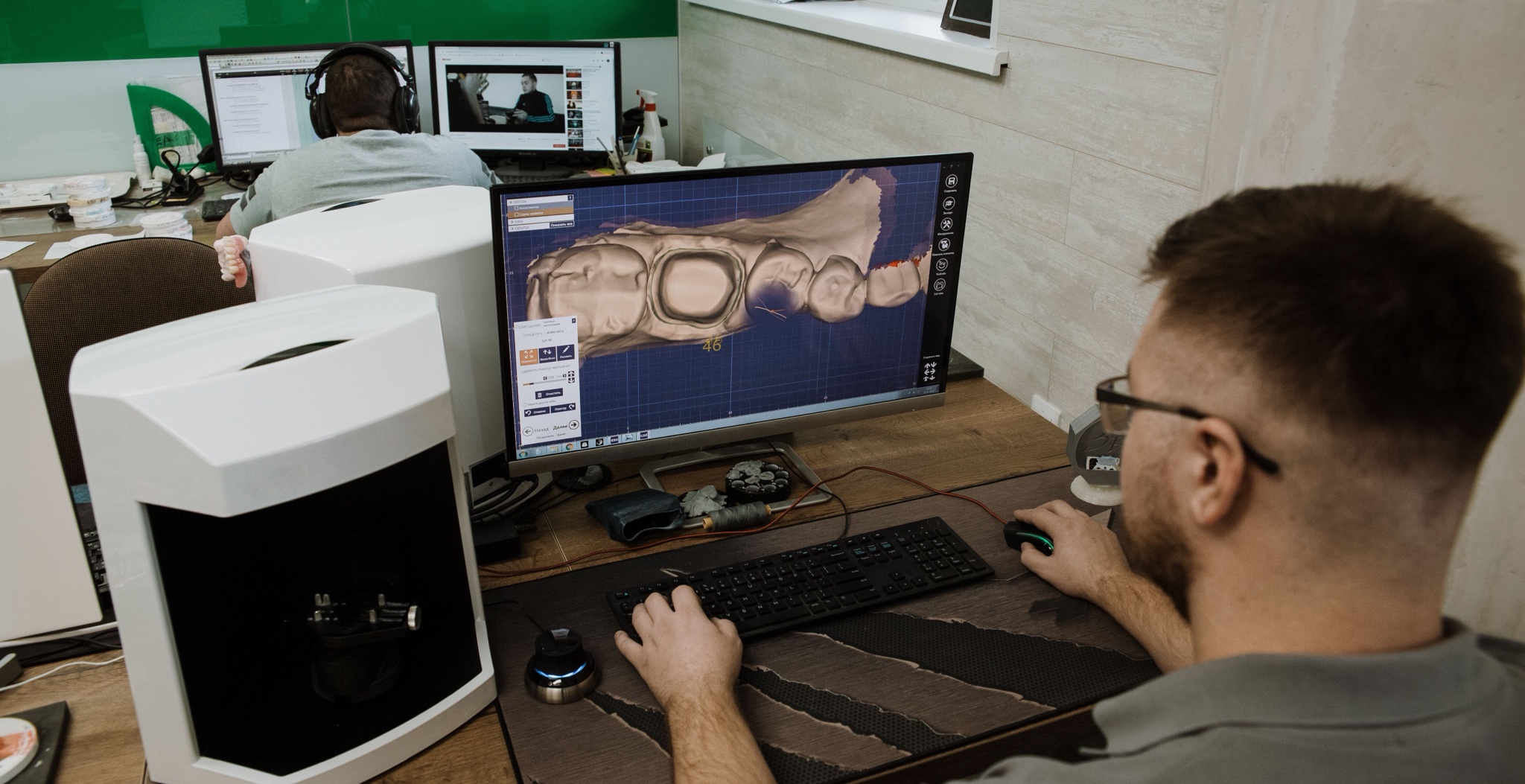
A digital dental lab serving around 300 practices was designing every crown by hand in CAD, and the queue kept growing. We built a generative workflow that proposes each design, so technicians refine instead of starting from a blank file.
In plain terms: every crown the lab produced started as an empty CAD file. A technician spent 30 to 40 minutes shaping each one, and in busy weeks the queue pushed turnaround out to six working days. The lab's most experienced designers, the people best placed to handle complex restorations, spent most of their day on routine single-unit cases instead, because those cases made up the bulk of the queue and someone had to clear them.
We trained a generative model on the lab's own library of approved crowns, so it proposes anatomically fitted geometry the moment an intraoral scan arrives. Technicians review and adjust every proposal in a browser-based 3D viewer before anything is released to milling, and each approved case feeds the next training round. Average design time per single-unit crown fell from 35 minutes to under 9, turnaround shortened from 6 working days to 3, and the design team's throughput rose 2.1x within 5 months without a single new hire.
The Problem
Manual CAD design queues
The lab had earned its position as the digital partner for around 300 dental practices, and every one of them fed cases into the same manual pipeline. Each incoming intraoral scan waited for a technician to open it in CAD and shape a crown from scratch, a task that took 30 to 40 minutes of skilled attention even for the most routine single-unit case. The queue only moved as fast as the people working it.
Demand did not arrive evenly. In busy weeks, turnaround stretched to six working days, and the practices at the end of that wait were the ones explaining delays to patients. The lab could not simply add hours to the day, and trained CAD designers are not hired quickly, so every surge in orders translated directly into longer promises.
The deeper problem was where senior skill was going. The lab's most experienced designers spent most of their day on routine single-unit crowns, the cases least in need of their judgement, while complex restorations competed for whatever attention remained. Every routine crown a senior designer shaped by hand was capacity the lab could not spend on the work that actually justified their expertise.
Manual CAD queues
Every crown began as an empty file waiting for a technician to shape it by hand, so nothing moved until skilled hands were free.
Slow per-case design
Each single-unit crown absorbed 30 to 40 minutes of skilled design time, capping daily output at whatever headcount and hours allowed.
Stretching turnaround
In busy weeks the design backlog pushed case turnaround out to six working days, and every practice in the queue felt the wait.
Misspent senior skill
Senior designers spent most of their day on routine single-unit cases rather than the complex restorations that needed their judgement.
What it was costing them
Every busy week compounded the same losses: turnaround promises stretched to six working days, practices waited longer to seat their patients, and the lab's ability to grow was capped by how many minutes of manual design it could staff. Meanwhile the designers best equipped for complex restorations were tied up on routine crowns, so the highest-value work moved no faster than the most ordinary.
The Solution
Generative design, technician approved
We built the workflow around an asset the lab already owned: its library of approved crowns. A generative model trained on that library learns what an acceptable crown looks like by this lab's own standards, and proposes anatomically fitted geometry for each incoming intraoral scan. Instead of starting from an empty file, technicians start from a proposal that is already most of the way there.
Human judgement stays exactly where it was. Every proposal lands in a browser-based 3D viewer where a technician reviews the geometry, adjusts whatever needs adjusting, and only then releases the case to milling. Nothing reaches a practice without a technician's approval, which kept clinical responsibility unambiguous and made the change an easier conversation with the lab's own team.
The workflow also improves itself. Each approved case, including the technician's adjustments, feeds back into the next training round, so the model steadily converges on the lab's house style and the corrections it once needed become corrections it no longer makes. The lab's daily production is now also its training data.
Key decisions
Train on the lab's own library
The model learned from the lab's approved crowns rather than a generic dataset, so its proposals reflect the standards this lab already signs off.
Technician approval on every case
No proposal goes to milling without a technician reviewing and adjusting it, keeping responsibility for every crown with a qualified human.
Review in the browser
The 3D viewer runs in a browser, so reviewing a proposal fits the existing workstation setup instead of demanding new specialist software.
Feedback loop from approvals
Every approved case flows back into the next training round, turning routine production into a steady stream of improvement for the model.
Target routine cases first
The generative step focuses on routine single-unit crowns, the volume work, freeing senior designers for the complex restorations that need them.
Measurable Impact
What changed after launch
The queue moved differently within months. Average design time per single-unit crown fell from 35 minutes to under 9, and case turnaround across the 300-practice client base shortened from 6 working days to 3. Throughput rose 2.1x within 5 months, and the lab absorbed that growth without hiring a single additional designer.
Quality moved with speed rather than against it. Once the feedback loop went live, the remake rate from fit issues fell from 4.8% to 2.9%, because each approved case teaches the model a little more about what fits. Senior designers now spend their attention on complex restorations, and the routine work that used to fill their day is reviewed rather than built from nothing.
Design time
35 minutes of manual CAD per single-unit crown
Proposals reviewed and finished in under 9 minutes
Case turnaround
Up to 6 working days in busy weeks
3 working days across the 300-practice base
Team throughput
Capped by manual design hours
Up 2.1x within 5 months, no new hires
Remake rate
4.8% of cases remade for fit issues
2.9% after the feedback loop went live
Headline results
Average design time per single-unit crown reduced from 35 minutes to under 9
Case turnaround shortened from 6 working days to 3 across the 300-practice client base
Design team throughput increased 2.1x within 5 months without additional hires
Remake rate from fit issues fell from 4.8% to 2.9% after the feedback loop went live
Tech & Tools Used
What powered the build
Every tool below earned its place in this engagement. Here is the part each one played.

Python (FastAPI)
Serves the design-generation API, receiving each incoming intraoral scan and returning proposed crown geometry into the review workflow.

PyTorch
Trains the generative model on the lab's library of approved crowns and runs each retraining round as newly approved cases feed back in.
PyTorch3D
Provides the differentiable 3D operations the model learns through, letting it generate anatomically fitted crown surfaces rather than flat images.

Open3D
Cleans and prepares the incoming intraoral scan meshes, so every case reaches the model as consistent, well-formed geometry.

Three.js
Renders the browser-based 3D viewer where technicians inspect each proposed crown, adjust its geometry and approve it for milling.

React
Builds the review interface around the viewer: the case queue, adjustment controls and the release-to-milling actions technicians work with all day.

Node.js
Runs the case-management backend that moves every crown through intake, generation, review and release without manual handoffs.

PostgreSQL
Stores case records, review decisions and the approval history that determines which crowns feed the next training round.
AWS S3 + SQS
S3 holds the scan and geometry files while SQS queues generation jobs, keeping design proposals flowing evenly through the busiest weeks.

Docker
Packages the training and inference services so the same environment runs identically from experimentation through to production.
Ready to Build your Dental Laboratory Business with Generative AI Applications
Ask Byte
Ask Byte
Typically replies instantly
just Now
Hi! I'm OrganByte's assistant. How can I help you today?
AI-generated content may be incorrect