
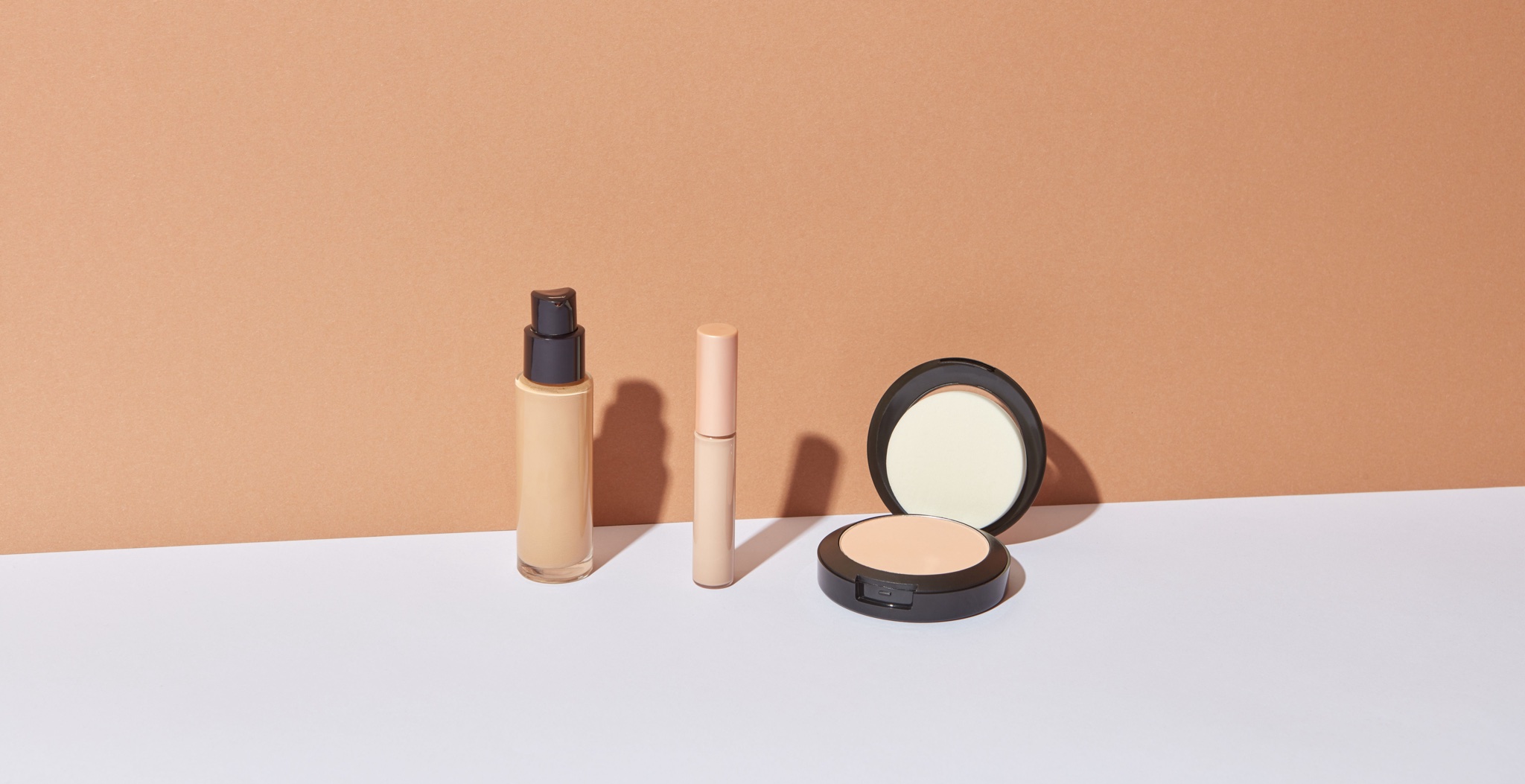
Quiz-Funnel CRO Programme for a DTC Cosmetics Brand
Let's Connect
Overview
What we built
A cosmetics brand was losing shoppers at one decision: which shade to buy. We built a guided shade-match quiz around that moment, and conversion rose while returns fell.
In plain terms: buying foundation online means guessing your shade from a photo, and most visitors to this brand's site refused to guess. Fewer than 1% of visitors bought anything, shoppers abandoned right at the shade decision, and nearly a quarter of foundation orders came back because the guess was wrong. With paid traffic rising in cost, the brand was paying more and more to send people into a funnel that leaked at the same point every time.
We spent five months treating that one decision as the whole battleground. A guided quiz now asks photography-calibrated questions about undertone, a recommendation engine turns the answers into a confident shade match, and a redesigned product page carries that match through to checkout. Every change was proven in an A/B test before it stayed. Sitewide conversion rose from 0.9% to 1.6%, quiz takers converted at 5.7% against 1.1% for everyone else, and shade-related returns fell from 23% to 14% of foundation orders.
The Problem
Shade uncertainty stalling checkout
The brand had strong products and steady traffic, but under 1% of visitors converted. Watching the funnel made the reason plain: shoppers browsed foundations and concealers, hovered over swatch photos, and left. A tiny square of colour on a screen could not tell anyone with real skin, real undertones and real lighting whether a shade would suit them, and shoppers knew it.
The shoppers who did push through and guess often guessed wrong. Shade mistakes sent nearly a quarter of foundation orders back as returns, which meant the cost of every misjudged swatch was paid twice: once in the lost customer, once in the reverse logistics. Each return also eroded the confidence of a shopper the brand had paid handsomely to acquire.
That acquisition cost was the sharpest edge of the problem. Paid traffic kept rising in price while the funnel quietly leaked at the same decision point, so every campaign poured more expensive visitors onto the same broken step. The brand did not have a traffic problem or a product problem: it had one unanswered question standing between browsing and buying.
Shade uncertainty
Swatch photos could not tell shoppers how a foundation or concealer would look on their skin, so the crucial decision felt like a gamble.
Checkout abandonment
Most visitors left before adding to basket, dropping out precisely at the shade decision rather than at price, shipping or payment.
Return-rate drag
Nearly a quarter of foundation orders came back over shade mistakes, taxing margin and souring first impressions with new customers.
Rising acquisition costs
Paid traffic grew steadily more expensive while conversion stayed under 1%, so every incremental visitor cost more and converted no better.
What it was costing them
With conversion under 1%, almost every pound of paid media was spent on a visitor who left empty-handed, and a meaningful slice of the revenue that did land was clawed back by shade-related returns. The economics compounded the wrong way: rising traffic costs, flat conversion, and a returns operation processing avoidable mistakes, all traceable to one unanswered question on the product page.
The Solution
Guided shade-match quiz funnel
We ran a five-month CRO programme built around a single conviction: solve the shade decision and the rest of the funnel would follow. The centrepiece is a guided shade-match quiz that asks photography-calibrated questions about undertone, replacing the guesswork of squinting at swatches with a short, structured conversation about the shopper's own skin.
Behind the quiz, a recommendation engine maps each set of answers to specific foundation and concealer shades, and a redesigned product page carries that match through to checkout, so the confidence built in the quiz never drains away at the final step. Nothing shipped on opinion: every change went out behind sequential A/B tests with holdout traffic, so we always knew what the site would have done without it.
Session recordings and funnel analytics steered each iteration. When the data showed shoppers stalling inside the quiz itself, we trimmed the flow from 19 steps to 12, and completion improved from 44% to 68%. The programme worked as a loop: observe where shoppers hesitate, form a hypothesis, test it against a control, keep only what wins.
Key decisions
Fix the decision, not the page
Rather than redesigning everything, the programme concentrated on the single point where the funnel leaked: the shade decision that shoppers could not make from photos.
Calibrate the quiz to photography
Undertone questions were calibrated against product photography, so the shades the engine recommends correspond to what shoppers have actually seen on screen.
Carry the match to checkout
The redesigned product page keeps the recommended shade front and centre through to purchase, so confidence built in the quiz survives the final step.
Test everything against holdouts
Sequential A/B tests with holdout traffic decided what stayed, protecting the programme from plausible-sounding changes that would quietly have hurt conversion.
Trim the quiz ruthlessly
When recordings showed fatigue mid-quiz, the flow was cut from 19 steps to 12, trading a little data for far more completed matches.
Measurable Impact
What changed after launch
Across five months of sequential testing, sitewide conversion rose from 0.9% to 1.6%. The quiz proved to be the engine of that growth: visitors who completed it converted at 5.7%, against 1.1% for non-quiz visitors in the same period, a gap that turned the quiz from an experiment into the heart of the buying experience.
The gains held up after the sale as well. Shade-related returns fell from 23% to 14% of foundation orders within two quarters, so more of the new revenue stayed earned, and fewer first purchases ended in disappointment. Quiz completion climbing from 44% to 68% means most shoppers who start the flow now leave with a shade match they trust.
Sitewide conversion
Under 1% of visitors completing a purchase
1.6% sitewide after five months of testing
Shade decision
Guesswork from swatch photos, most shoppers abandoning
Guided quiz converting completers at 5.7%
Foundation returns
23% of orders back over shade mistakes
Down to 14% within two quarters
Quiz completion
44% finishing a 19-step flow
68% after trimming the flow to 12 steps
Headline results
Sitewide conversion rate rose from 0.9% to 1.6% across five months of sequential A/B tests
Visitors completing the quiz converted at 5.7%, against 1.1% for non-quiz visitors in the same period
Shade-related returns fell from 23% to 14% of foundation orders within two quarters
Quiz completion improved from 44% to 68% after trimming the flow from 19 steps to 12
Tech & Tools Used
What powered the build
Every tool below earned its place in this engagement. Here is the part each one played.

Shopify Plus
The commerce platform under the programme, hosting the product pages and checkout that each winning variant shipped into.

React
Built the quiz interface itself, keeping the multi-step flow fast and fluid enough that shoppers finish it rather than drifting away mid-question.

Node.js
Runs the recommendation engine that maps quiz answers to specific foundation and concealer shades and serves the match to the product page.
Optimizely
Managed the sequential A/B tests and holdout traffic, deciding with statistical discipline which variants earned a permanent place on the site.

Google Analytics 4
Provided the funnel analytics showing where visitors dropped between browsing, quiz, basket and checkout, and how each cohort moved after every release.

Hotjar
Captured the session recordings that revealed shoppers hesitating over swatches and fatiguing mid-quiz, evidence that shaped the trimmed flow.
Segment
Unified behavioural events across quiz, site and email into one stream, so testing, analytics and lifecycle messaging all worked from the same data.
Klaviyo
Picked up quiz results for follow-up email, so a shopper's shade match travels with them even when they do not buy on first visit.

PostgreSQL
Stores the shade-mapping logic and quiz responses behind the recommendation engine, keeping every match reproducible and inspectable as the programme iterated.
Ready to Build your Beauty & Cosmetics Business with Conversion Rate Optimization (CRO)
Ask Byte
Ask Byte
Typically replies instantly
just Now
Hi! I'm OrganByte's assistant. How can I help you today?
AI-generated content may be incorrect